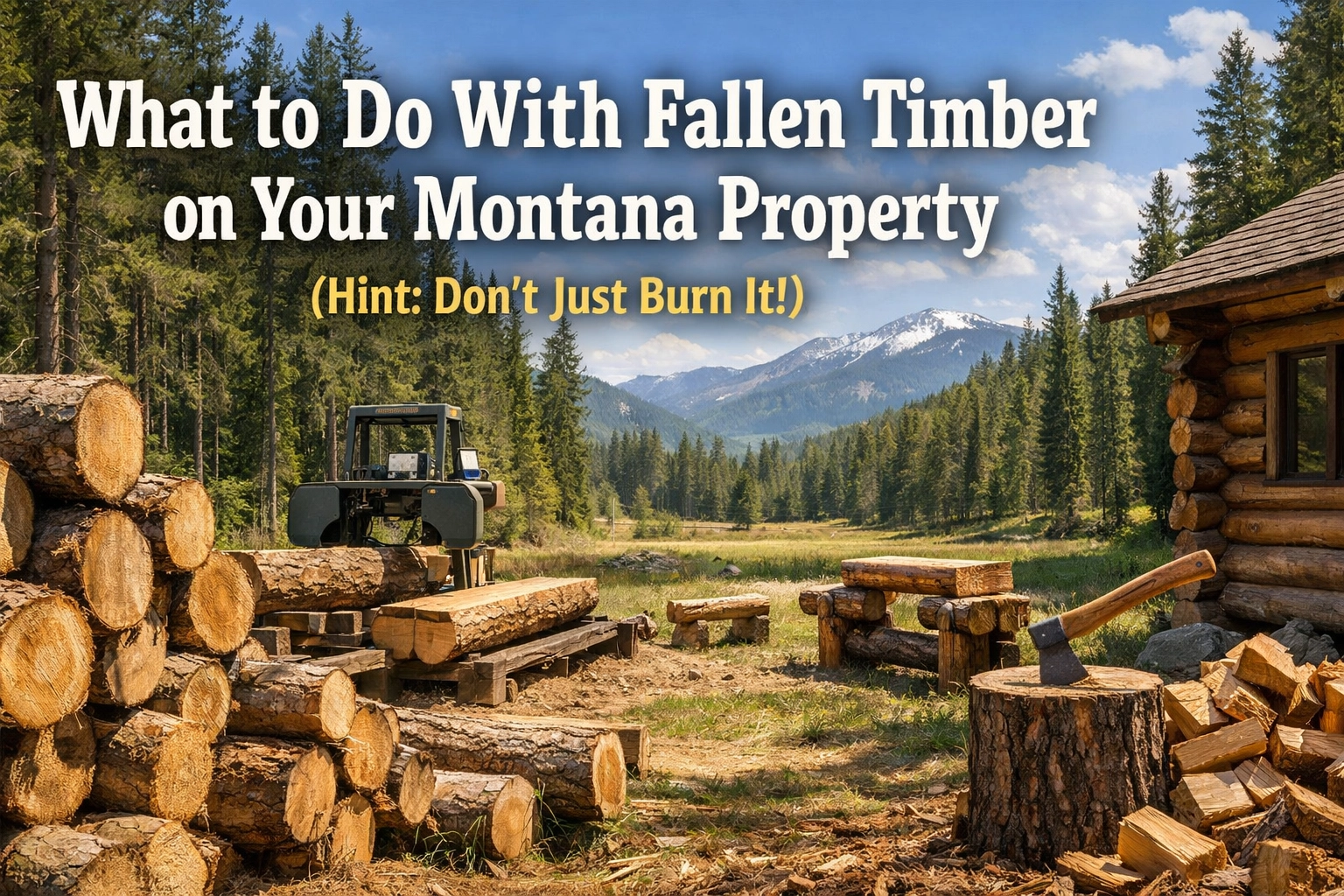
You just had a windstorm tear through your property. Maybe you've been clearing overgrown trees. Either way, you're staring at a pile of downed timber that looks like a disaster zone.
First instinct? Light a match and call it a day.
Hold up. Before you go full bonfire mode, there are better options that won't get you in trouble with the county, won't send smoke into your neighbor's yard, and might actually put money back in your pocket.
WHY BURNING ISN'T ALWAYS YOUR BEST BET
Look, burning brush and slash is a Montana tradition. But fallen timber? That's different than clearing undergrowth.
Fire restrictions come fast in the Bitterroot Valley. One day you're good to burn, the next day Ravalli County issues Stage 1 restrictions and your pile is sitting there until September. Maybe October if we're lucky.

Plus, Montana has actual regulations about this stuff. The Fire Hazard Reduction Law requires landowners to deal with woody debris on private lands. If you're planning to burn a significant amount of timber, you need to notify the Department of Natural Resources and Conservation first.
Nobody wants that paperwork headache.
And let's be real about the smoke. Your neighbors already think you're creating your own weather system when you burn a brush pile. A full timber burn? That's going to make enemies fast, especially if anyone nearby has respiratory issues or just wants to enjoy their deck without a gas mask.
The bigger issue: Fallen timber burns hot and unpredictable. One gust of wind and you're dealing with spot fires, worried calls to the fire department, and a whole mess you didn't plan for.
LETTING IT ROT ISN'T GREAT EITHER
So if burning's complicated, why not just leave it where it fell?
Because downed timber doesn't just disappear. It becomes a fire hazard sitting there waiting for lightning season. The Montana forestry department calls this "fuel loading," and it's exactly what causes properties to go up during wildfire season.
Plus, you're creating prime real estate for beetles, carpenter ants, and all the other bugs you don't want hanging around. They move into the rotting logs, then they move into your structures. Not a fun progression.

And if you ever want to sell your property? Buyers take one look at fallen timber scattered everywhere and see dollar signs flying away. Nobody wants to buy a cleanup project.
THE SALVAGE OPTION NOBODY TALKS ABOUT
Here's what most Montana property owners don't realize: those fallen trees have actual value.
Storm damage tree cleanup doesn't have to mean waste removal. It can mean resource recovery.
Think about it. That downed timber is already seasoned wood. It's been cut, it's on the ground, and depending on the species, it could become custom beams, dimensional lumber, fence posts, or firewood worth selling.
We've milled lodgepole pine that came down in a windstorm into beautiful beams for a barn rebuild. Turned damaged Douglas fir into siding. Salvaged ponderosa that would've been burned into custom furniture lumber.
The key is acting fast. Once timber sits on the ground too long, beetles and rot move in. But within the first few months after a tree comes down, the wood is often in great shape.
Montana's portable sawmill services make this possible. We bring the mill to your property, so you're not paying to haul logs all over creation.
WHAT WE DO WITH YOUR FALLEN TIMBER
At Bitterroot Timber Solutions, we handle the whole situation from start to finish.
First, we clear it. Our equipment can handle everything from single trees to multiple acres of storm damage. We'll get the timber stacked, limbed, and ready to assess.
Then we figure out what's worth keeping. Not every log is mill-quality, and that's fine. The good stuff gets milled, the rest gets chipped for mulch or cut for firewood.

Custom timber milling is where it gets interesting. We run a portable sawmill right on your property. You pick the dimensions. We cut what you need.
Want to keep some lumber for your own projects? Done. Rather we take it all and you're just happy to have the mess cleaned up? Also fine.
Some property owners in the Bitterroot Valley have used salvaged timber from their own land clearing to build sheds, fencing, even additions to their homes. Feels pretty good to tell people the wood came from your own property.
THE PROCESS IS PRETTY STRAIGHTFORWARD
Step 1: You call us after storm damage or when you've got downed timber from clearing work.
Step 2: We come out and assess what you've got. Not every situation is the same, so we walk the property and figure out the best approach.
Step 3: We handle the cleanup. Our equipment clears the timber, processes what needs processing, and hauls away what you don't want.
Step 4: If you want milling done, we bring in the portable sawmill. You get custom-cut lumber from your own trees.
Step 5: Your property is clean, you've got usable materials if you want them, and you're not dealing with a fire hazard or compliance issues.
No fighting with fire restrictions. No smoke complaints. No rotting timber attracting pests.
THIS WORKS FOR ALL KINDS OF SITUATIONS
Storm damage tree cleanup is the obvious one. Wind knocks down a dozen trees, you need them gone yesterday.
But this same approach works for planned thinning projects. If you're creating defensible space around your home, don't assume all that timber has to become a burn pile.
Forest management projects on larger properties. You're improving your land, clearing out overgrowth. Those trees can become revenue instead of just a disposal problem.
Even if you've got old standing dead timber you've been meaning to deal with. It's dangerous to leave standing, but it might still be good wood once it's down.

THE MONTANA REGULATIONS NOBODY WANTS TO READ
Since we're talking about doing this the right way, here's the deal with Montana's forestry regulations.
If you're handling significant timber on your property, the Department of Natural Resources and Conservation wants to know about it. This protects water quality, soil resources, and makes sure forestry work is done responsibly.
When you work with us, we handle that notification requirement. We know the Best Management Practices, we follow them, and you don't have to figure out the paperwork.
The 2024 audit found that 99% of forestry practices in Montana met or exceeded BMP standards. We're part of that statistic because we do this work properly.
BETTER THAN BURNING, CHEAPER THAN HAULING
Here's the money side of things.
Burning costs you time and creates liability. What if the fire gets away? What if you violate burn restrictions? That's expensive.
Hauling timber to a landfill or disposal site? You're paying by the ton, plus trucking, plus the fact that most facilities won't even take whole logs.
Working with a local timber service that does cleanup and milling? You're solving the problem and potentially walking away with usable lumber. Sometimes the milled lumber value offsets the cleanup cost entirely.
We're not going to promise you'll make money on every situation. But we can promise you won't waste it all on disposal fees or risk fines from improper burning.
CONTACT US BEFORE YOU LIGHT THAT MATCH
If you've got fallen timber on your Montana property and you're wondering what to do with it, give us a call before you make a bonfire.
We'll come take a look, give you honest feedback about what makes sense, and handle whatever approach works best for your situation.
Bitterroot Timber Solutions handles storm damage cleanup, land clearing, and custom milling throughout the Bitterroot Valley. We're local, we know the regulations, and we've seen every kind of timber situation you can imagine.
Call us at [your phone number] or visit bitterroottimbersolutions.com to schedule a property assessment.
Your fallen timber doesn't have to be a problem. Sometimes it's an opportunity.
Comments are closed