Look, wildfire season in the Bitterroot Valley isn’t a “maybe” anymore. It’s a “when.” And once fire restrictions hit, your options for clearing brush and thinning trees get real limited, real fast.
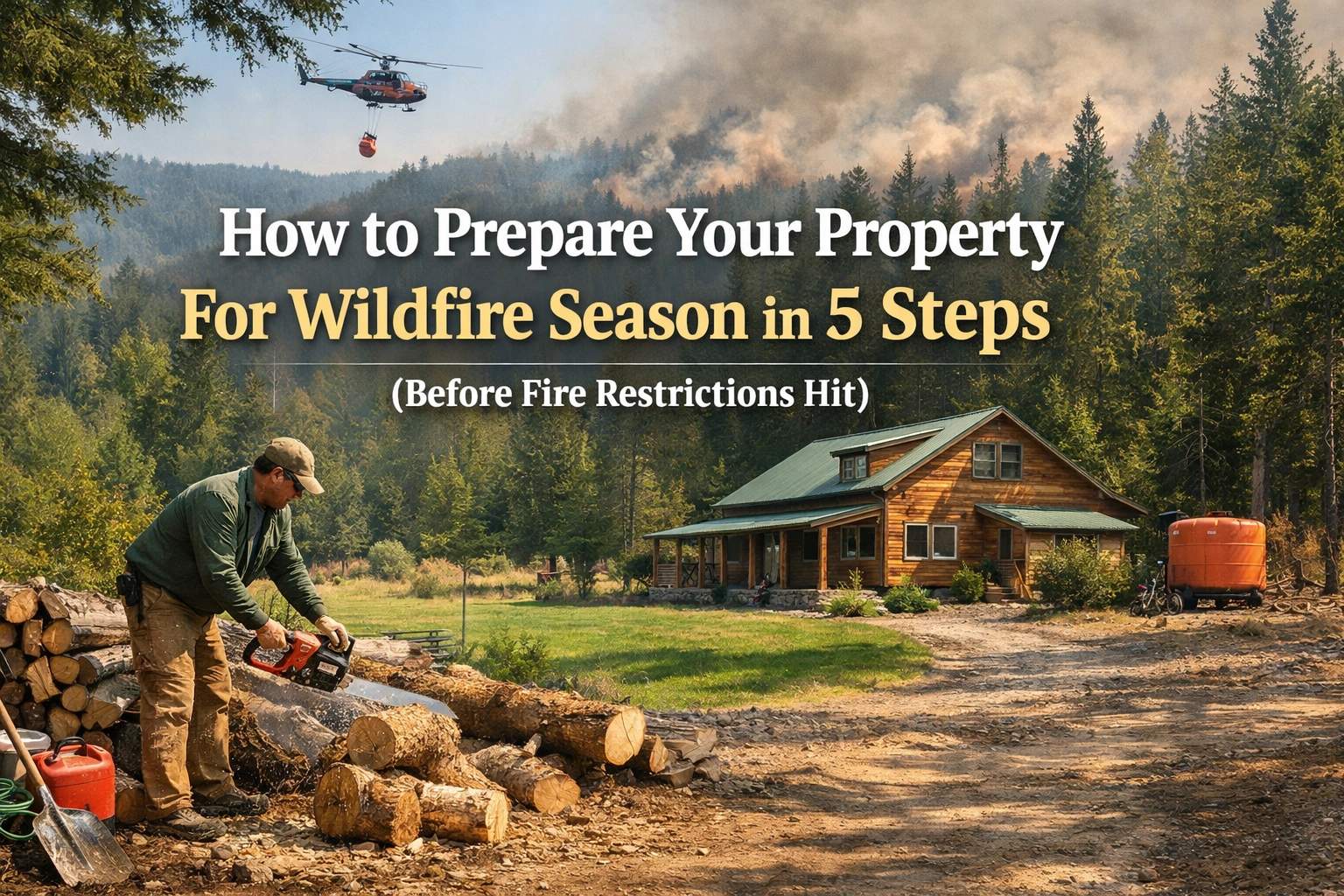
The good news? How to Prepare Your Property For Wildfire Season in 5 Steps. (Before Fire Restrictions Hit)You’ve still got time. Here’s what you need to do now, before chainsaws get banned and your property becomes a tinderbox.
STEP 1: CREATE DEFENSIBLE SPACE (AND ACTUALLY MAINTAIN IT)
Defensible space clearing isn’t just some bureaucratic checkbox. It’s the difference between your house surviving and becoming another statistic on the evening news.
You need 30 to 100 feet of cleared space around your home. That means removing or seriously thinning out the dense stuff, junipers, sagebrush, overgrown shrubs, fallen logs, and anything else that’ll burn hot and fast.

Here’s the breakdown:
Zone 1 (0-5 feet from your house): Nothing. No plants, no mulch, no firewood stacks. Keep it clear.
Zone 2 (5-30 feet): Thin it out. No dry grass, no dead branches, no shrubs touching each other. Space things out so fire can’t jump easily.
Zone 3 (30-100 feet): Keep trees spaced, remove ladder fuels (more on that below), maintain low grass.
Fire mitigation Bitterroot Valley isn’t optional anymore. If you haven’t cleared around your structures yet, now’s the time. And if you cleared it three years ago? Check it again. Nature fills in fast.
STEP 2: GET RID OF LADDER FUELS
Ladder fuels are what let ground fires climb up into tree canopies. Once fire gets into the treetops, you’re dealing with a whole different beast.
Prune low-hanging branches up to at least 10 feet off the ground. Higher if you can manage it. Remove shrubs growing directly under trees. Clear out saplings and understory vegetation.
Think of it like this: you’re creating gaps so fire can’t climb. Ground to shrub to low branch to tree crown, that’s a ladder. Break the rungs.

This is also where forest thinning makes a huge difference. Too many trees too close together means more fuel, hotter fires, and less chance of individual trees surviving. Thin out overcrowded stands so there’s space between crowns.
Wildfire fuel reduction isn’t about clear-cutting your property. It’s about smart spacing and removing the stuff that’ll kill everything if it ignites.
STEP 3: CLEAR YOUR ROOF, GUTTERS, AND DECK
Embers travel. Sometimes miles. And they love to nestle into the perfect little spots, pine needles in your gutters, leaf piles on your deck, debris in the corners of your roof.
One ember finds the right fuel source and your whole structure can go up, even if the main fire never gets close.
Clean your roof and gutters regularly. Like, actually get up there and do it. Sweep your deck. Clear out anything under the deck too, that’s a common ignition point people forget about.
Install 1/8-inch metal mesh screening on vents to keep embers from getting inside your attic or crawl space. It’s a cheap fix that can save your house.
STEP 4: MOVE COMBUSTIBLES AWAY FROM STRUCTURES
That firewood stack against your garage? Move it. Propane tanks next to the house? Relocate them. Lumber pile near the shed? Find a new spot.
Keep everything flammable at least 30 feet away from your home and outbuildings. That includes wood piles, lumber, fuel cans, old pallets, dried grass clippings, and anything else that’ll burn.

Yeah, it’s less convenient. But convenience doesn’t matter much if your shop burns down.
Also, switch out wood mulch near your foundation. Gravel or rock work better for that immediate 5-foot zone around your house. Wood mulch can smolder for hours and eventually ignite siding.
STEP 5: DO THE WORK BEFORE RESTRICTIONS KICK IN
Here’s the thing nobody talks about enough: once Stage 2 fire restrictions hit, chainsaw use gets banned. No more clearing. No more thinning. You’re stuck with whatever state your property’s in.
That’s why spring prep matters. Get your land clearing Bitterroot Valley work done now while you can still operate equipment.
And here’s where a lot of property owners miss an opportunity: all that material you’re clearing doesn’t have to become waste. Those hazard trees you’re removing? Some of them can be milled into usable lumber. Fence posts. Beams. Firewood for next winter.
We run a portable sawmill and can turn your debris into resources instead of just hauling it to the dump. Thinning and clearing makes sense financially when you’re getting value out of what you remove.

WHAT FIRE RESTRICTIONS ACTUALLY MEAN
Let’s be clear about what you’re up against once restrictions hit.
Stage 1: No open fires, smoking restrictions, fireworks banned. You can still use chainsaws with spark arrestors before 1 PM.
Stage 2: No chainsaws. No welding. No grinding. Nothing that creates sparks. Your clearing season is over.
Most years, we hit Stage 1 by late June or early July in the Bitterroot Valley. Stage 2 follows shortly after if conditions stay dry. That gives you basically now through June to get serious work done.
THE STUFF NOBODY WANTS TO HEAR
This work takes time. It costs money. It’s physically demanding. And it’s ongoing: not a one-and-done project.
But here’s the reality: insurance companies are getting pickier about renewals. Counties are cracking down on fuel loads. And if a fire does come through, the properties that survive are the ones where owners put in the work.
You don’t have to do everything yourself. That’s what we’re here for. Land clearing, defensible space setup, forest thinning, converting downed timber into something useful: it’s literally what we do.

GET STARTED NOW
Don’t wait until you see smoke. Don’t wait until the county sends a letter. Don’t wait until your neighbor’s property burns and you realize how close it got to yours.
Walk your property this week. Look at what needs clearing. Check your zones. Make a list.
Then start working through it. Hire help if you need it. Rent equipment. Call in professionals for the big trees or heavy thinning work.
The Bitterroot Valley is beautiful. It’s also fire-prone. Those two things aren’t going to change. What you can change is how prepared your property is when the next fire season rolls around.
We’re here if you need us. Fire mitigation Bitterroot Valley isn’t just a service we offer: it’s work that actually matters. Give us a call and we’ll walk your property with you, point out problem areas, and give you a straight answer about what needs doing.
But do it soon. Time’s shorter than you think.
Comments are closed